
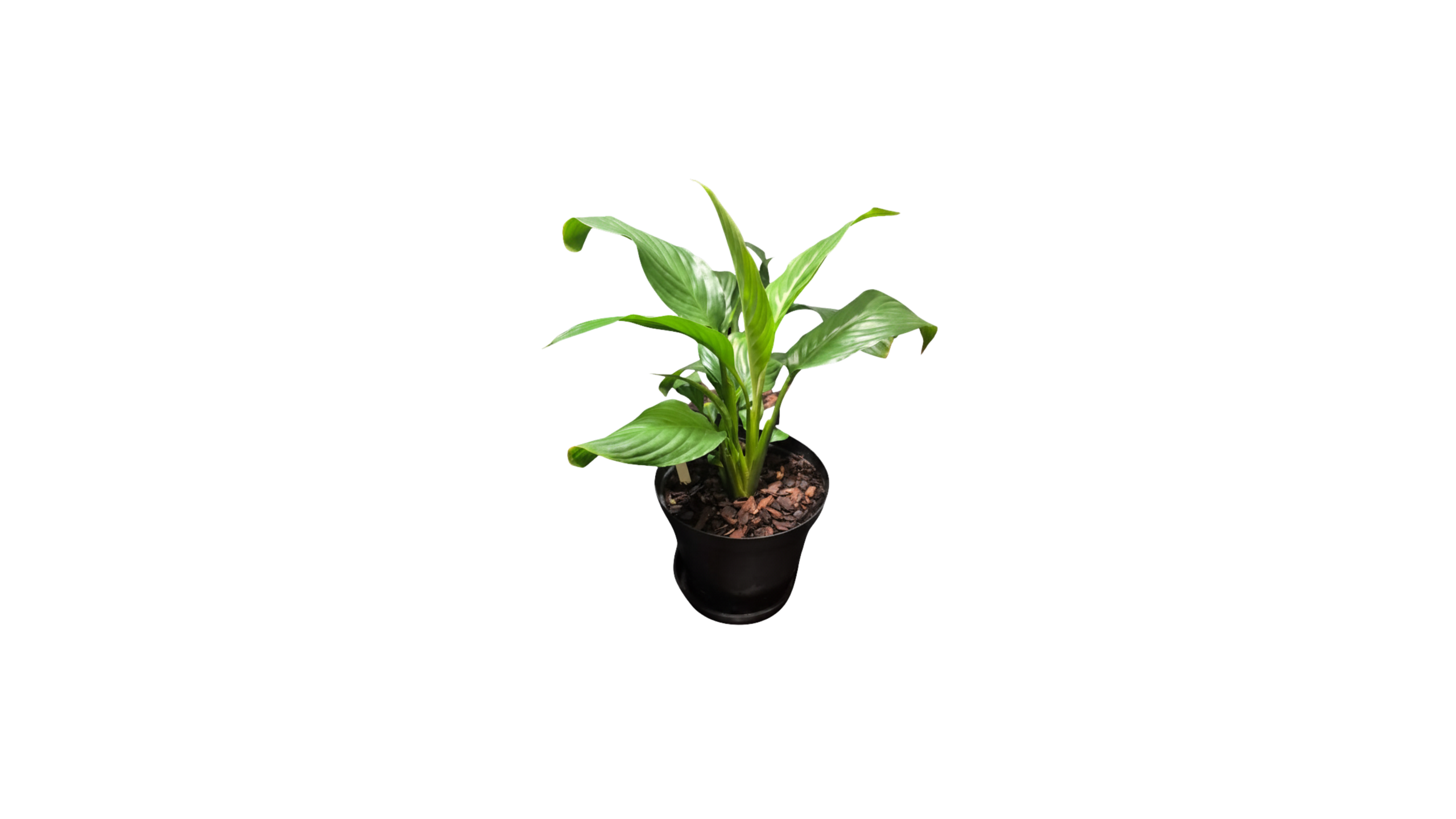
Description
For that quiet, graceful greenery…
Botanical Name
Spathiphyllum spp.
Common names:
Peace lily, spathe flower, white sails, closet plant
The Peace Lily is a calm, graceful indoor plant known for its glossy deep-green leaves and elegant white spathes that rise gently above the foliage. It brings a soft, clean feeling into a room, adding structure and freshness without feeling loud or overpowering.
Its upright, mounding growth makes it easy to place in living rooms, bedrooms, offices, bathrooms, and shaded corners where other flowering plants may struggle. When happy, it rewards steady care with fresh green growth and long-lasting white blooms that slowly fade into soft green over time.
At The Bottled Garden, we love the Peace Lily for the way it brings stillness into a space. It is simple, expressive, and quietly generous, making it a beautiful choice for anyone wanting indoor nature that feels peaceful, elegant, and easy to live with.
Advisory caution around pets and children
Keep out of reach — Peace Lilies contain insoluble calcium oxalate crystals and are toxic if chewed or ingested by pets or children.
Available in:
15cm Round Plastic Nursery Pot with our Living Systems Substrate – Tropical Aeration Blend
Did you know?
The “flower” on a Peace Lily is not actually a single flower. The white part is a spathe, a modified leaf that wraps around the central spadix.
Learn more below.
Where the Peace Lily is found in nature
Peace Lilies belong to the Spathiphyllum genus, a group of tropical evergreen plants found in warm, humid forest environments across parts of Mexico, tropical America, Malesia, and the western Pacific. In nature, plants like these grow in shaded, moist places where filtered light moves through taller vegetation and the soil remains damp but breathable.
On the forest floor, the Peace Lily is adapted to gentler light, steady warmth, and moisture without standing in stagnant water. Indoors, this helps explain its calm temperament: it does not ask for harsh sun or dramatic care, only a stable position, soft light, and a watering rhythm that keeps the roots comfortable.
Difficulty level – Easy. Peace Lilies are forgiving and well suited to beginners, provided they are not left in harsh direct sun or constantly soggy soil.
Light – Bright, indirect light is best, although Peace Lilies can tolerate lower light better than many flowering indoor plants. Avoid direct sun, which can scorch the leaves and cause brown tips.
Watering & soil – Keep the soil lightly moist, but never waterlogged. Allow the top layer to dry slightly between waterings, then water thoroughly and let excess water drain away. A well-draining, organic-rich mix helps support healthy roots and reduces the risk of root stress.
Humidity & temperature – Peace Lilies enjoy warm, stable indoor conditions and appreciate moderate humidity. Avoid cold drafts, strong air-conditioning, heaters, and sudden temperature drops. Brown leaf tips may be linked to dry air, too much light, underwatering, or excess fertiliser.
The best places for bringing it indoors:
- Bedrooms, offices, and living rooms with soft filtered light
- Bathrooms or kitchens with gentle humidity and indirect light
- Shaded corners that need a calm, upright plant with a softer presence
Ecosystem companions – Pairs beautifully with ferns, pothos, calatheas, philodendrons, and darker ceramic planters for a layered, peaceful indoor display. Its white spathes work especially well against deep green foliage, warm wood, soft sage, and neutral interiors.
Why we love it
The Peace Lily has a quiet way of changing the mood of a room. Its glossy leaves bring depth, while its white spathes add softness and light. It feels composed without being cold, making it one of those plants that brings nature indoors in a simple, calming, and deeply familiar way.
Did you know?
Despite its common name, the Peace Lily is not a true lily. It belongs to the Araceae family, the same broader plant family as philodendrons, monsteras, anthuriums, and pothos.
Its white “flower” is also more interesting than it first appears. The showy white part is a spathe, which is a modified leaf. The actual tiny flowers sit on the central spadix, the textured spike held inside the spathe.
This is one of the reasons the Peace Lily feels so sculptural. What looks like a simple white bloom is actually a carefully arranged botanical structure, designed to stand out from the glossy green leaves around it.

Reviews
There are no reviews yet.