
Description
For that soft, compact jungle feeling…
Botanical Name
Syngonium podophyllum ‘Pixie’
Common names:
Syngonium Pixie, Dwarf Arrowhead Plant, Arrowhead Vine, Arrowhead Plant, Goosefoot Plant, American Evergreen, Nephthytis, Trileaf Wonder
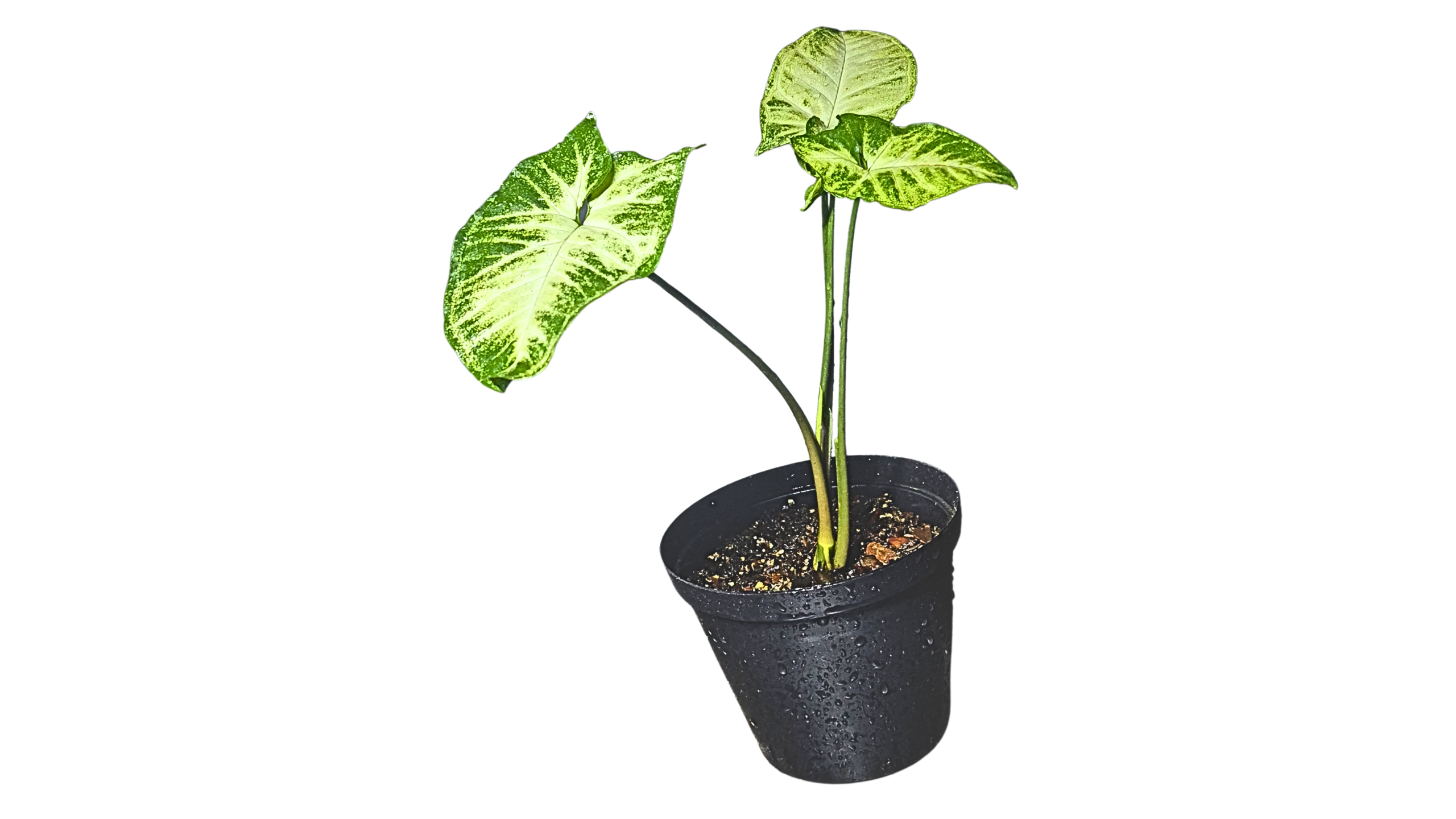
Syngonium Pixie is a compact indoor plant known for its small arrow-shaped leaves, soft green colouring, and gentle variegation. Its foliage brings a fresh, tropical feeling into a space without taking over, making it especially suited to shelves, desks, terrariums, and smaller corners that need a little more life.
This dwarf variety stays more compact than many other Syngoniums, although it can still develop a soft trailing or climbing habit over time. It can be grown neatly in a small pot, allowed to spill slightly from a shelf, or used in humid terrarium-style displays where its smaller leaves help create scale and texture.
At The Bottled Garden, we love Syngonium Pixie for the way it brings softness and detail into smaller spaces. It is a lovely choice for anyone wanting an easy, tropical plant that feels gentle, fresh, and quietly alive without becoming too large too quickly.
Advisory caution around pets and children
Keep out of reach – Syngonium podophyllum contains insoluble calcium oxalate crystals and is toxic if chewed or ingested by pets or children.
Available in:
15cm Round Black Plastic nursery Pot with our Living Systems Substrate – Tropical Aeration Blend
Did you know?
Syngonium leaves often change shape as the plant matures, which is why young plants can look very different from older climbing growth.
Learn more below
Where the Syngonium Pixie is found in nature
The wild form of Syngonium podophyllum is native from Mexico into tropical parts of Central and South America, where it grows in warm, humid forest environments. In nature, it behaves as a climbing vine, using aerial roots to move through the understory toward filtered light.
In a tropical forest, a plant like this begins life close to the shaded ground, where the air is damp, the light is softened by taller vegetation, and moisture moves slowly through leaf litter, roots, bark, and soil. Its compact juvenile leaves are adapted to lower, protected spaces, while mature growth can climb upward into brighter layers of the forest.
As a dwarf cultivar, Syngonium Pixie brings that same soft forest-floor feeling indoors, but in a smaller, more manageable form.
Difficulty level – Easy to Moderate. It is generally forgiving, but grows best with steady moisture, warmth, and indirect light.
Light – Medium to bright indirect light is best. It can tolerate lower indirect light, but growth may slow and the plant may stretch. Avoid harsh direct sun, which can scorch the leaves.
Watering & soil – Water when the top layer of soil begins to dry, keeping the mix lightly moist but never soggy. A breathable, well-draining substrate helps protect the roots from sitting too wet.
Humidity & temperature – Enjoys moderate to higher humidity and warm indoor conditions. Keep away from cold drafts, strong air-conditioning, and sudden temperature drops.
The best places for bringing it indoors:
- Desks, bedside tables, shelves, and small plant corners
- Bright bathrooms or kitchens with filtered light and extra humidity
- Terrariums, mossariums, or small grouped plant displays
Ecosystem companions – Pairs beautifully with Fittonia, ferns, moss, small Philodendrons, Pilea, and other humidity-loving tropical plants. It also works well with natural wood, soft ceramics, mossy textures, and miniature terrarium landscapes.
Why we love it
Syngonium Pixie brings detail without drama. Its small arrow-shaped leaves add softness, colour, and a gentle tropical rhythm to a space, making it one of those plants that feels easy to place and easy to enjoy.
It is especially lovely where you want the feeling of a living system in miniature: a shelf, a desk, a glass vessel, or a small green corner that quietly changes the atmosphere around it.
Did you know?
The “arrowhead” look that makes Syngoniums so recognisable is usually most obvious in juvenile growth. As many Syngonium podophyllum plants mature and climb, their leaves can become more divided and lobed, sometimes looking very different from the compact young leaves people first bring home.
This is one of the reasons Syngoniums are interesting plants to observe over time. They do not simply get bigger. Their shape can change in response to maturity, support, light, and growth habit.
For Syngonium Pixie, the appeal is that it keeps this arrowhead charm in a smaller, more compact form, making it especially useful for terrariums, desktops, and smaller indoor plant displays.
Need help keeping your Syngonium Pixie settled?
Syngonium Pixie is an easy-going tropical plant, but it still responds best when light, moisture, warmth and airflow stay reasonably balanced. Keep it in medium to bright indirect light, water when the top layer begins to dry, and avoid letting the roots sit in soggy soil.
For more detailed guidance, visit the full Syngonium Pixie Care Guide for watering signs, placement tips, humidity support and common troubleshooting.
Suggested button text:
Read the Syngonium Pixie Care Guide

Reviews
There are no reviews yet.