
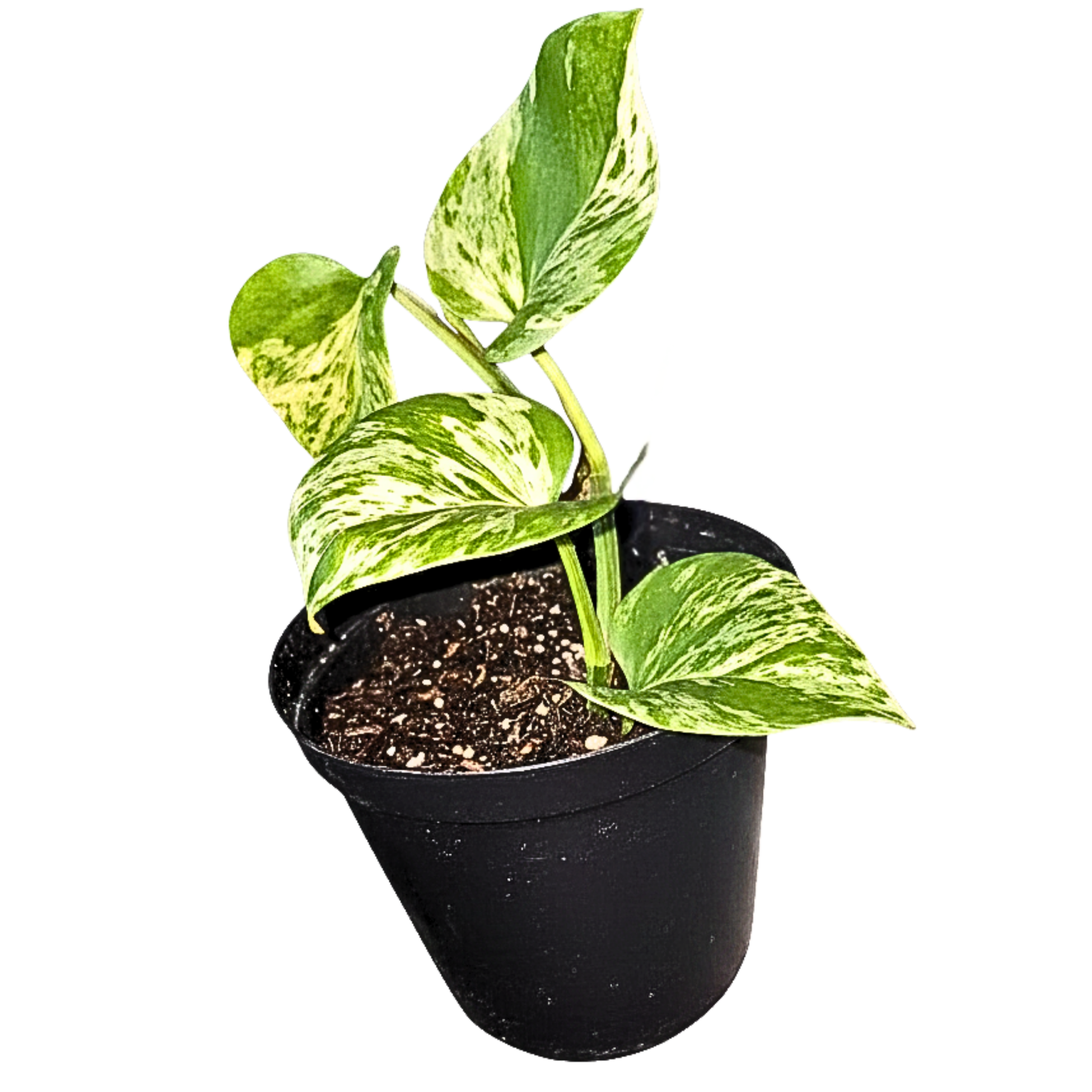
Description
For that soft marbled vine feeling…
Botanical Name
Epipremnum aureum ‘Marble Queen’
Common names:
Marble Queen Pothos, Pothos Marble Queen, Devil’s Ivy, Golden Pothos, Pothos, Ivy Arum, Taro Vine
Marble Queen Pothos is a trailing or climbing indoor plant known for its heart-shaped leaves brushed with soft green, cream and white marbling. Its variegation gives the plant a lighter, airier feeling than many green trailing plants, making it a beautiful choice for bright shelves, hanging pots and calm indoor corners.
This cultivar can be allowed to trail naturally, soften the edge of a shelf, or climb upward with support for a fuller and more structured display. Because of its pale variegation, it appreciates brighter indirect light than darker green pothos varieties, which helps it hold onto that creamy marbled pattern over time.
At The Bottled Garden, we love Marble Queen Pothos for the way it brings gentle movement and soft contrast into a room. It is easy-going enough for newer plant owners, but still visually special enough to feel considered, especially in spaces that need lightness, trailing growth and a little more botanical texture.
Advisory caution around pets and children
Keep out of reach – Epipremnum aureum contains insoluble calcium oxalates and is toxic if chewed or ingested by pets or children.
Available in:
[Insert current pot size] Nursery Pot with our Living Systems Substrate – Tropical Aeration Blend
Did you know?
Marble Queen Pothos keeps its creamy variegation best in bright indirect light; in lower light, new growth may become greener over time.
Learn more below
Where the Marble Queen Pothos is found in nature
The parent species, Epipremnum aureum, is native to the Society Islands in French Polynesia and is naturally a tropical climbing vine. In warm forest environments, it uses aerial roots to cling and climb, moving from shaded lower growth toward brighter filtered light. NC State Extension describes Epipremnum aureum as native to the Society Islands and notes that it climbs by aerial roots when given support.
In nature, a plant like this is part of a layered tropical system: roots finding texture, stems stretching toward support, and leaves adjusting to the light that filters through taller vegetation above. The smaller trailing leaves we enjoy indoors are the juvenile form, while supported mature growth can produce much larger leaves over time.
As an indoor plant, Marble Queen Pothos brings that climbing forest habit into a more manageable form. It does not need a perfect rainforest room, but it does appreciate filtered light, a breathable soil mix, moderate warmth and occasional humidity support.
Difficulty level – Easy to Moderate. It is forgiving, but the pale variegation needs brighter indirect light to stay strong.
Light – Medium to bright indirect light is best. It can tolerate lower indirect light, but growth may slow and the cream-white variegation may become less pronounced. Avoid harsh direct sun, which can scorch the leaves.
Watering & soil – Water when the top layer of soil has dried, then allow excess water to drain away. Marble Queen Pothos prefers a breathable, well-draining substrate rather than soil that stays wet for too long. Overwatering can lead to root stress or rot.
Humidity & temperature – Adapts well to normal indoor conditions, but appreciates moderate humidity and warm rooms. Keep away from cold drafts, strong air-conditioning and very dry airflow.
The best places for bringing it indoors:
- Hanging from shelves, hooks or plant brackets in bright filtered light
- Trailing from bookcases, cupboards or plant stands
- Climbing up a moss pole, trellis or indoor support for fuller growth
Ecosystem companions – Pairs beautifully with Philodendron hederaceum, Scindapsus, ferns, Syngonium, Monstera adansonii and other soft tropical foliage plants. It also works well with hanging baskets, moss poles, natural wood, warm ceramics and darker green plants that allow the cream variegation to stand out.
Why we love it
Marble Queen Pothos brings softness without feeling delicate. Its pale marbled leaves lift a room gently, adding movement, contrast and an easy tropical rhythm.
It is especially useful where you want the feeling of a living system without a complicated care routine. Let it trail, let it climb, or let it soften a bright corner; either way, it quietly changes the mood of the space around it.
Did you know?
The name “pothos” is still widely used, but this plant is not currently classified in the genus Pothos. It belongs to the genus Epipremnum. NC State notes that Epipremnum aureum was previously known as Scindapsus aureus, and that plants once treated as Epipremnum pinnatum ‘Aureum’ are now correctly recognised as Epipremnum aureum.
Another interesting detail is that Epipremnum aureum is known for being shy-flowering. A Scientific Reports study found that the species does not normally flower in the wild or under cultivation, and linked this to a deficiency in bioactive gibberellins, which are involved in floral transition.
For everyday indoor growing, that means Marble Queen Pothos is loved almost entirely for its foliage, growth habit and adaptability rather than flowers. Its beauty is in the way it grows: node by node, leaf by leaf, finding light and support as it moves.
Need help keeping your Marble Queen Pothos settled?
Marble Queen Pothos is an easy-going indoor vine, but it looks its best when its light and watering stay reasonably balanced. Keep it in medium to bright indirect light, water once the top layer of soil begins to dry, and avoid leaving the roots sitting in soggy soil.
For more detailed guidance, visit the full Marble Queen Pothos Care Guide for watering signs, placement tips, variegation support and common troubleshooting.
Suggested button text:
Read the Marble Queen Pothos Care Guide

Reviews
There are no reviews yet.