

Modern life means many of us spend most of our day indoors. Between homes, offices and screens, opportunities to connect with nature can easily become limited. Fortunately, bringing nature indoors does not require transforming your room into a forest or jungle.
Indoor plants, bottled gardens, natural tones, sunlight and other elements of biophilic design can introduce more greenery and a stronger sense of connection with the natural world into everyday spaces.
Whether you want to brighten a desk, create a more inviting home or add life to a workspace, even small changes can make an indoor environment feel calmer, warmer and more inspiring.
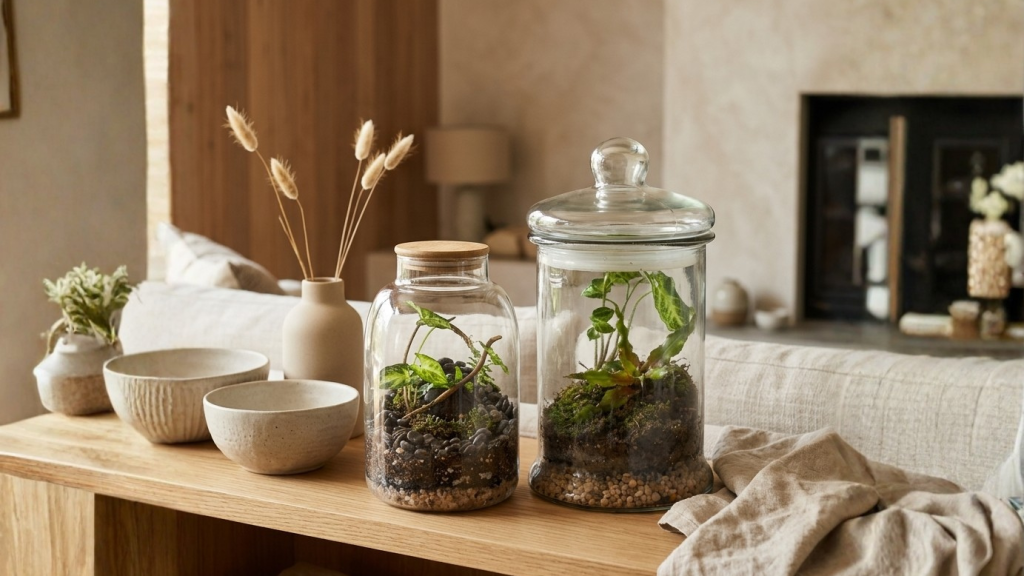
Why We Feel Better Around Nature
Humans have a long-standing connection with natural environments. Greenery, natural light, organic forms and views of the outdoors can make built spaces feel less sterile and more restorative.
Research into nature exposure and biophilic design suggests that interaction with natural environments may support relaxation, mood and concentration.
You do not necessarily need access to a large garden to enjoy that connection. Bringing elements of nature into the places where you already live and work can be a practical way to make nature part of your everyday routine.
What Is Biophilic Design?
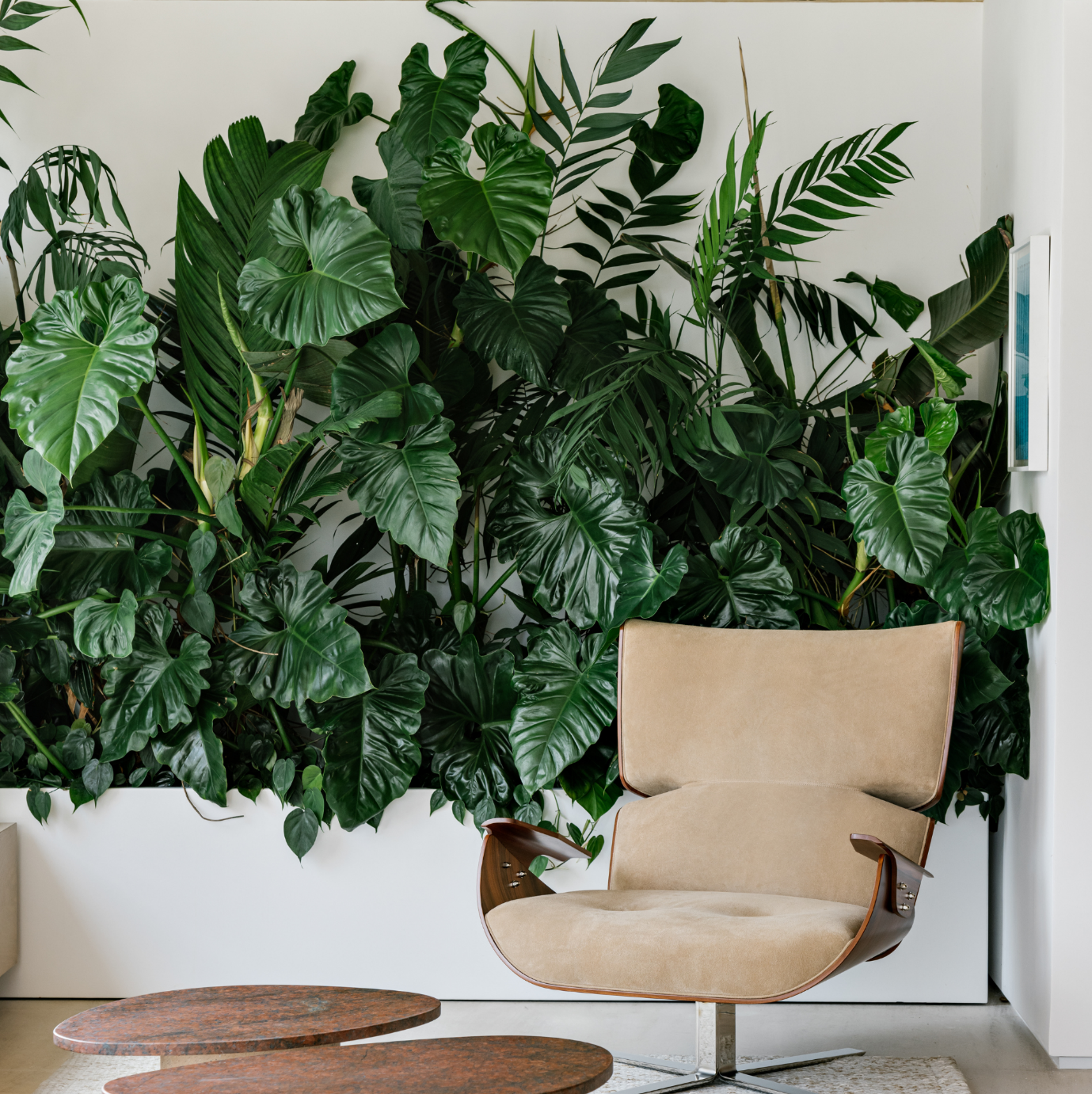
Biophilic design is an approach to interiors and architecture that strengthens the connection between people and nature.
It can include living plants, but it goes much further than greenery alone.
Common biophilic design elements include:
-
- Indoor plants and miniature gardens
-
- Natural light
-
- Views of trees, gardens or outdoor landscapes
-
- Wood, stone and other natural materials
-
- Earth-inspired colours
-
- Organic shapes and patterns
-
- Natural textures
-
- Water features
-
- Natural scents and sounds
The idea is not simply to decorate a room with plants. It is to create an environment that feels more connected to the natural world. This also represents the brand values of The Bottled Garden.
Easy Ways to Bring Nature Indoors at Home
You can introduce biophilic elements gradually. A few carefully chosen additions can have more impact than filling every available surface with greenery.
1. Add Indoor Plants
Houseplants are one of the simplest ways to introduce natural colour, form and texture.
Choose plants according to the amount of light available in the space and the level of maintenance/care that actually suits your lifestyle. Rather than choosing plants purely for appearance, consider where they will live and how much attention you realistically want to give them.
2. Create a Miniature Indoor Garden
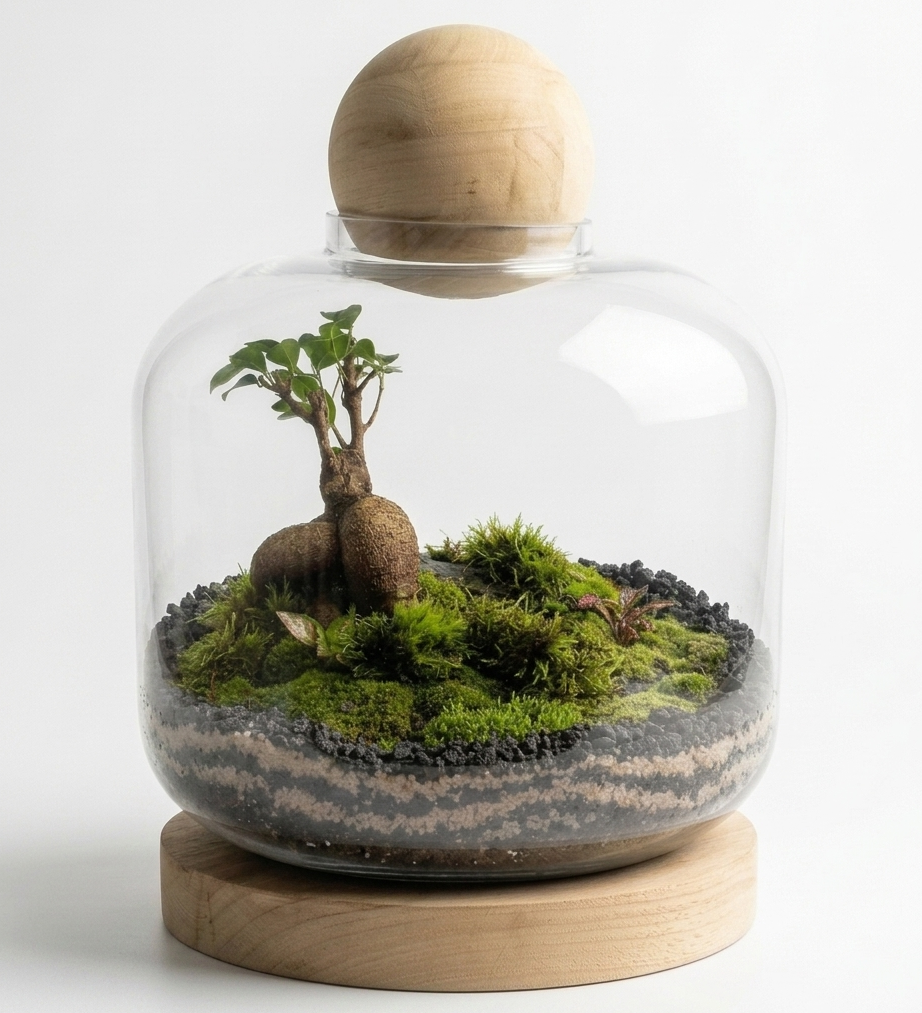
A bottled garden or terrarium is an attractive option for smaller spaces. These miniature landscapes of real nature bring together plants, soil, stone and other natural elements inside a glass vessel, creating a small ecosystem that can be enjoyed from a desk, shelf or table.
Because they take up relatively little room, bottled gardens can work particularly well in apartments, studies, reception areas and offices where space for conventional gardening is limited.
They also turn greenery into a design feature rather than simply another pot plant.
3. Make Better Use of Natural Light
Open curtains and blinds during the day and avoid unnecessarily blocking windows. Natural light changes throughout the day, giving indoor spaces some of the variation we experience outdoors.
If possible, position plants, seating or workspaces where they can benefit from daylight without exposing sensitive plants to unsuitable direct sunlight.
4. Introduce Natural Materials
Wood, stone, cork, linen, cotton and similar materials can make an indoor environment feel warmer and more organic.
You do not need to redesign an entire room. A wooden table, stone planter, woven basket or natural-fibre textile can subtly change the character of a space.
5. Use Colours and Textures Inspired by Nature
Greens are an obvious choice, but nature offers a much wider palette. Think forest green, soft moss, sand, clay, stone, muted blue, warm brown and earthy neutral tones.
These colours can be introduced through walls, furniture, artwork, textiles or decorative objects.
Bring Nature Indoors for a Workplace
Nature-inspired design is not limited to the home. Offices can often feel particularly disconnected from the natural world, especially when they rely heavily on artificial lighting, hard surfaces and screens.
Introducing plants and natural elements can make work environments feel more welcoming and human. To start, consider these options:
-
- A bottled garden, terrarium or botanical display on a desk or reception counter
-
- Small plants in shared workspaces
-
- Greenery in meeting rooms
-
- Natural materials in furniture or décor
-
- Positioning desks to take advantage of daylight
-
- Artwork featuring natural landscapes or botanical forms
Even when space is limited, a small natural focal point can soften an otherwise functional environment.
Small Spaces Can Still Feel Green
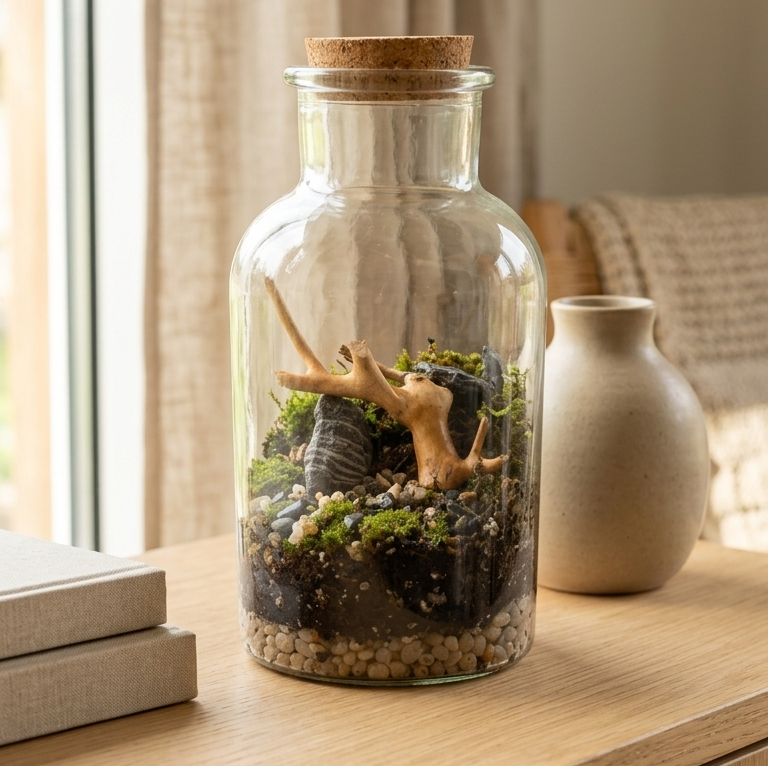
You do not need a large house, balcony or garden to build a stronger connection with nature. In compact spaces, consider vertical rather than horizontal greenery. Hanging plants, shelves, wall-mounted planters and miniature gardens can introduce vegetation without occupying valuable floor space.
A terrarium or bottled garden can be particularly useful in this situation because it creates the visual richness of a miniature landscape within a very small footprint. The aim is not to fit as many plants as possible into the room. It is to select natural elements that work comfortably with the space you have, and The Bottled Garden’s company mission reflects it goals to guide anyone through that journey.
Think Beyond Sight
Our experience of nature involves more than simply seeing greenery. Try to consider the other senses as well.
Natural textures such as wood, stone and woven fibers add a tactile dimension. Gentle natural fragrances can change the atmosphere of a space. Birdsong, rainfall or flowing water can introduce another layer of connection with the outdoors.
Used thoughtfully, these details can make an indoor space feel much richer without overwhelming it.
Choosing the Right Indoor Greenery for you
The best indoor garden is one that suits your environment and lifestyle. Before choosing plants or a bottled garden, you may need to consider:
-
- Light: How much natural light does the space receive?
-
- Space: Do you need something compact for a desk or a larger feature for a room?
-
- Maintenance & Care Involvement: How frequently are you comfortable caring for plants?
-
- Style: Do you prefer something lush and organic, clean and contemporary, or small and sculptural?
-
- Location: Is the greenery intended for a home, office, reception space or as a gift?
Thinking about these factors first makes it easier to choose something that can be enjoyed over the long term. However this can be quite an overwhelming amount of factors or information required to make the right choice. At The Bottled Garden, our mission is to serve as your friendly local guide to different ways of bringing nature indoors, to simplify the process for anyone. If you’re still unsure of how to get started, feel free to contact us for personalized guidance.
Start Small
Creating a nature-inspired home or workplace does not require an expensive renovation. Simply start with one area.
It might be a desk that needs a little life, an empty shelf, a dull office corner or a room that feels disconnected from the outdoors.
Introduce one or two natural elements and build from there. A small bottled garden, automated terrarium, a beautiful plant, more daylight or a natural material can be enough to begin changing how the space feels.
Bring a Little More Nature Into Everyday Life
Our homes and workplaces do not have to exist separately from the natural world, although they often feel that way. Through plants, miniature nature, bottled gardens, terrariums or paludariums, organic materials and thoughtful biophilic design, anyone can create indoor environments that feel more alive, calmer and more connected to nature.
And sometimes the smallest garden can make the biggest difference.
Explore The Bottled Garden and discover a little piece of nature for your home, desk, workspace or someone special.