EFT, Cash on Delivery, & Payshap Payments Accepted with order confirmation
All live plant deliveries come with DOA & Arrival Guarantee , for full terms and conditions, please visit our Ts & Cs.
[INSERT NOTE & LINK TO REFUND POLICY]
Please Note: {insert natural variations disclaimer
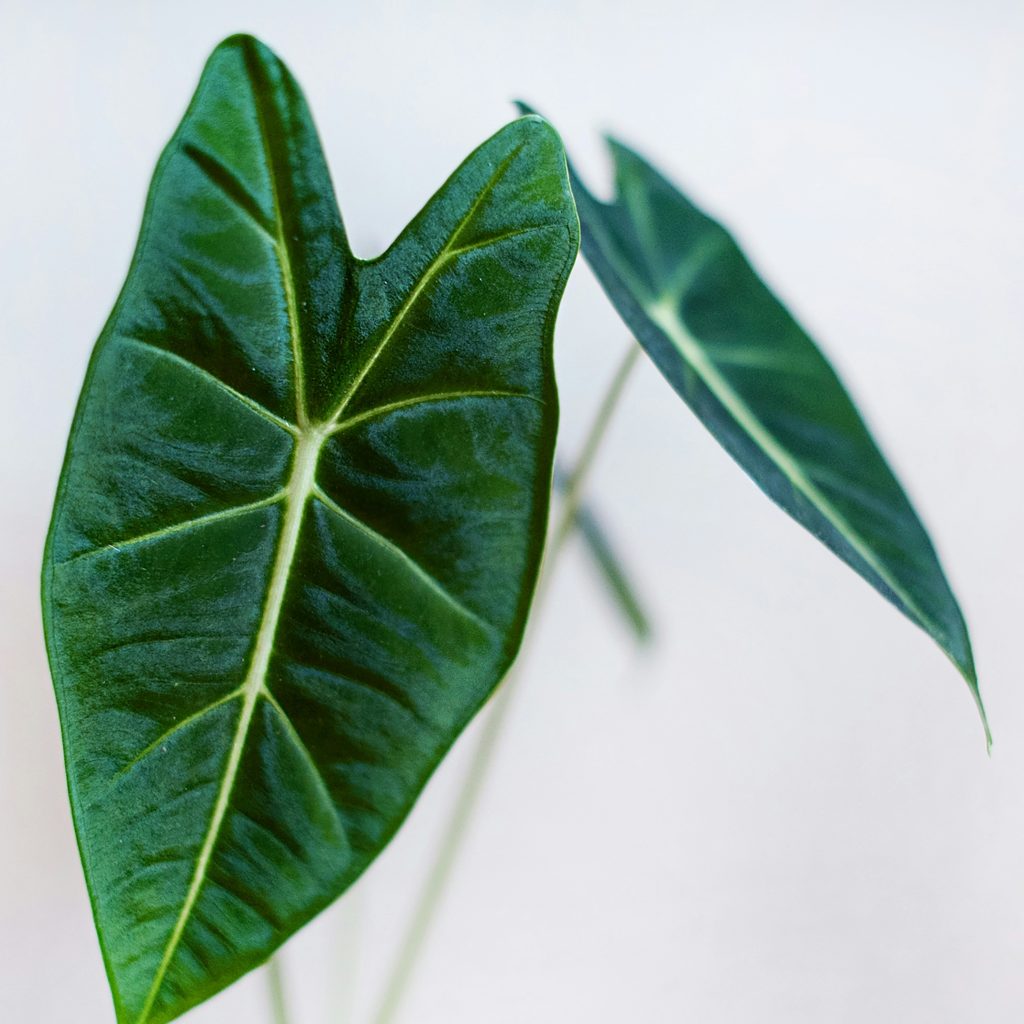
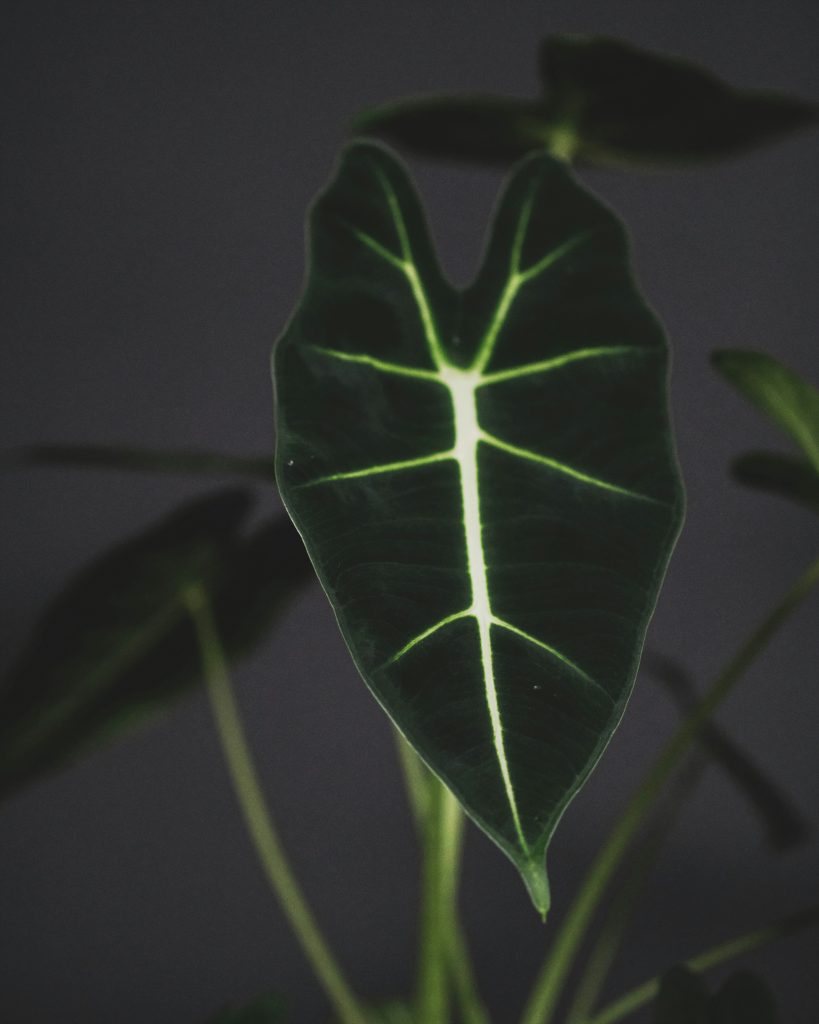
Alocasia Frydek develops from a central corm and growth point. Each leaf rises on an individual petiole, then opens into a dark, arrow-shaped blade with pale veins that give the plant its strong graphic character.
The velvety surface is visually important but physically delicate. Repeated rubbing, polishing or contact with walls and furniture may leave marks that cannot be reversed. A calm position with space around the foliage is therefore part of the plant’s care, not only a styling decision.
New growth may emerge lighter, softer or differently angled before the leaf hardens and settles. At the same time, the plant may redirect energy away from an older leaf. One ageing lower leaf can be normal when the crown remains firm and new growth continues.
Several leaves yellowing together, collapsing petioles or soft tissue near the base require closer assessment. Possible contributing conditions include prolonged saturation, cold exposure, root stress or a sudden environmental change.
The underlying species is associated with warm tropical forest conditions where taller vegetation filters direct sun and the root zone receives both moisture and oxygen.
The named cultivar is a horticultural selection, so it’s ecosystem context should be understood through the natural growth pattern of Alocasia micholitziana, rather than as a separate wild population.
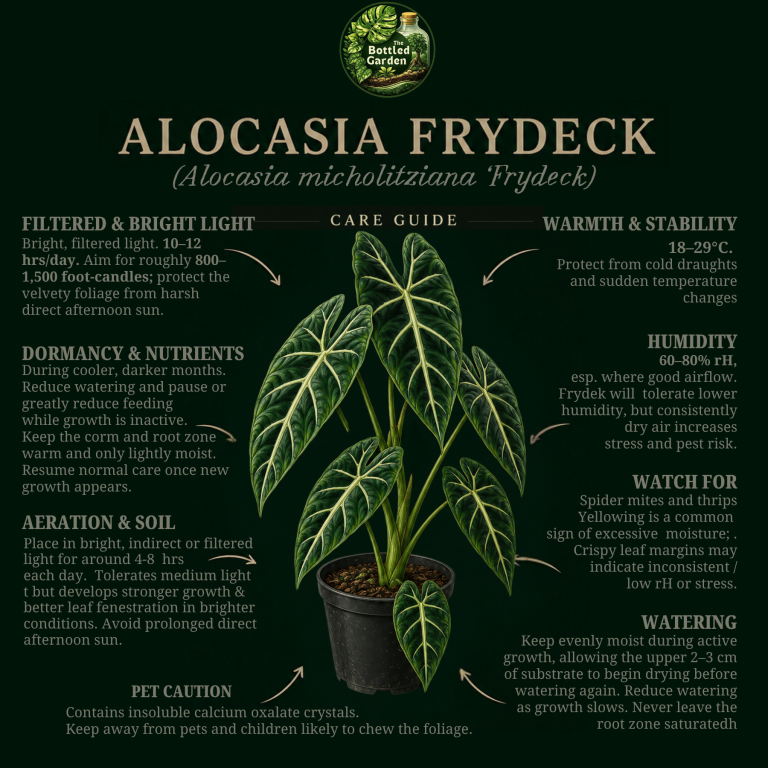
Provide a bright room with filtered natural light, stable warmth and protection from direct midday or afternoon sun.
The plant should be close enough to a window to receive useful light, but not placed where intense sun heats or bleaches the leaves.
Leaves rise individually from a central corm or short underground stem. The plant develops upward and outward rather than climbing.
Allow space around the crown so emerging leaves can unfurl without rubbing against walls, curtains or nearby plants.
Water thoroughly when the upper portion of the growing mix begins to dry, then allow excess water to leave the pot.
Adjust the interval according to warmth, light, airflow, pot size and seasonal growth. Do not use a fixed weekly schedule.